Covering nearly two-thirds of our planet and essential to life, water is the most valuable and abundant resource on Earth. Human development and survival is tied to our proximity to water; for food, drinking, sanitation and industry. As a result of our reliance on this resource, we have generated pollution from a number of sources. This is endangering the ecological stability of our lakes, rivers and oceans.
Insecticides, sewage disposal, fertilizers, pharmaceuticals, toxic chemicals, oil spills and manufacturing wastes are just some of the harmful contaminants that are getting into our precious lakes, rivers and oceans on a daily basis. These forms of pollutants are killing marine life, forcing beach closures, causing toxic algae blooms and negatively affecting human health at alarming rates.
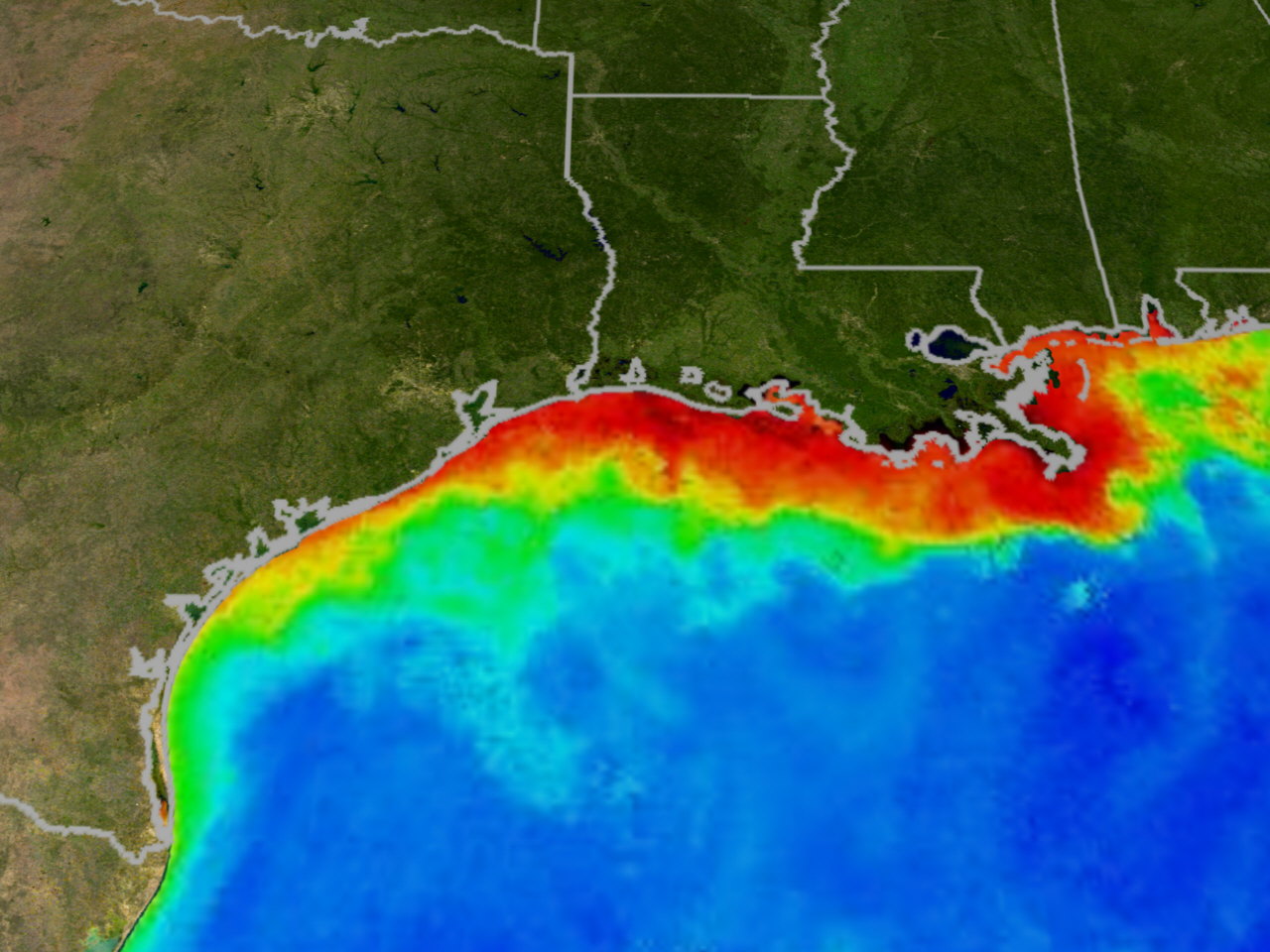
I recently read several articles about Dead Zones in our oceans and seas. Dead Zones are areas of water with oxygen levels to low to sustain aquatic life. According to a report by the United Nations Environment Programme, some 150 areas of Dead Zones exist around the world today. One of the largest Dead Zones in the world is in the Gulf of Mexico. This particular Dead Zone can cover 6000-7000 square miles, and, as can be seen in the NASA satellite image above, spans from the Mississippi Delta to Texas. Nitrogen, phosphorus, and similar runoff from the Mississippi River watershed have contributed to the creation of this Dead Zone. Forty percent of the streams and rivers in the United States drain into the Mississippi River which then drains into the Gulf of Mexico. Large algae blooms then grow on the surface of the water and as they decompose they fall to the ocean floor and consume the oxygen rich waters below. The end result is a Dead Zone. An area void of life.
Human activity has essentially killed aquatic life in these areas. How much more water pollution will it take to destroy human life?